What is Neurodiversity?
Neurodevelopmental conditions differ from mental illness. Such as depression or anxiety – which refers to patterns of behaviour where a person experiences a state of mind that’s different from their ‘normal’ self.
With neurodevelopmental conditions, there’s no 'normal' state of mind to compare to, which can make treatment more difficult. Instead of aiming to ‘reset to normal’, ADHD treatment aims to help people with ADHD reach their full potential.
Causes of neurodevelopmental conditions include:
genetics
trauma at birth
infectious disease
immune disorders
nutritional factors
physical trauma

ADHD and Coexistence
It’s common for people with ADHD to experience symptoms of other neurodevelopmental conditions, such as autism spectrum condition (ASC), Tourette syndrome, obsessive-compulsive disorder (OCD), dyslexia and dyspraxia. This is known as coexistence or co-occurrence.
UK studies on co-existence show:
Approximately one in two people with ADHD also have dyslexia
Approximately one in two people with ADHD also have dyspraxia
Nine out of ten people with Tourette syndromes also have ADHD
Two out of three people with ADHD have autistic spectrum traits – and people with ADHD are eight times more likely to meet the criteria for diagnosis with autism spectrum condition (ASC)
While it’s common for people with neurodevelopmental conditions such as ADHD to also experience mental health conditions, lack of understanding means it’s also common for neurodevelopmental conditions to be misdiagnosed as mental illness. Many people are treated for depression or anxiety, only to discover, years later, that they’re neurodivergent.
ADHD can also coexist with certain physical health conditions, such as Ehlers-Danlos syndromes (EDS) – sometimes known as hypermobility (though not all EDS patients are hypermobile) – Mast Cell Activation Syndrome (MCAS) and coeliac disease.
Some also consider giftedness to be a form of neurodivergence, particularly in rare cases such as savant syndrome or hyperthymesia (a highly detailed autobiographical memory).
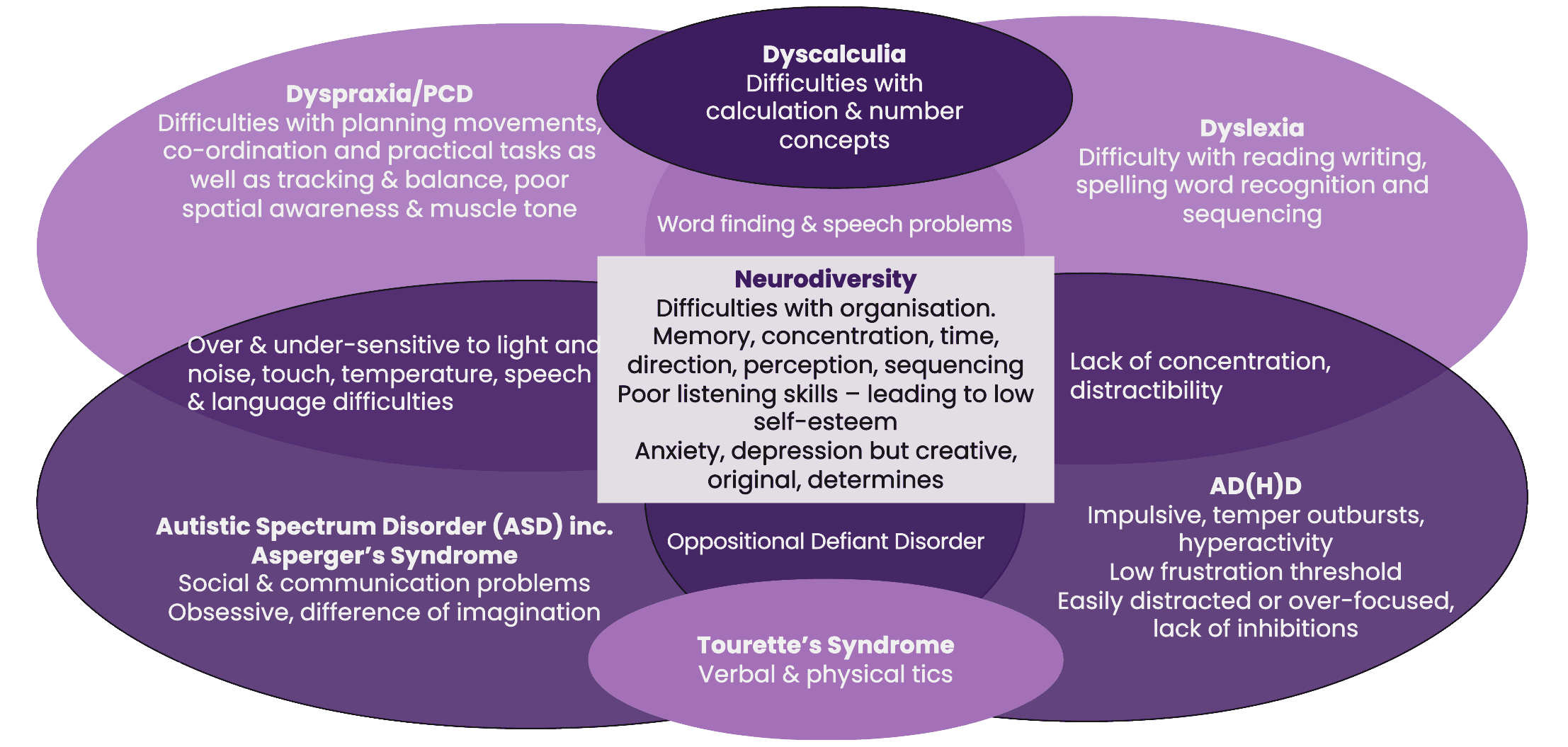
The Language of Neurodiversity
Neurodiversity refers to the natural differences between people’s brains and the way they process information.
Coined in the late 1990s by Australian sociologist Judy Singer, neurodiversity refers to the natural differences between people’s brains and the way they process information. Just like descriptors such as race, culture, class and gender, neurodiversity helps to describe people with the characteristics and behaviours of neurodevelopmental conditions in an objective and non-prejudiced way.
Generally, the word neurodivergent is used to describe individuals, neurodiverse is used to describe groups or communities, and neurotypical describes people with no neurodevelopmental condition.
Experts estimate that up to 15% of the UK population are neurodivergent, while the remaining 85% are neurotypical.
The Future of Neurodivergence
Our understanding of neurodivergence is still evolving.
As research continues, some conditions that have traditionally been viewed as mental illness – such as certain personality disorders, psychopathy or schizophrenia – may be found to reflect underlying neurodevelopmental differences rather than poor mental health, and a different approach to support, care and understanding may be needed as a result.
Of the UK population, statistics estimate:
8%
have ADHD
10%
have dyslexia
8%
have dyspraxia
6%
have dyscalculia
1%
have autism spectrum condition (ASC)
1%
have Tourette syndrome
3%
have generalised intellectual disability
ADHD and Equity
Living in a world largely designed for neurotypical people can make it harder for neurodivergent individuals to thrive.
Much of our society – from schools and workplaces to healthcare and social systems – is built around the idea of a ‘typical’ brain, and living in a world largely designed for neurotypical people can make it harder for neurodivergent individuals to thrive. But when we create inclusive, equitable systems that reflect the needs of all minds – both neurotypical and neurodivergent – everyone benefits.
A better understanding of neurodiversity helps shift the focus from perceived impairment towards recognising the value of the different strengths, characteristics and abilities we all bring – and that can only be a good thing.

What's next?
Keen to embrace neurodiversity within your business or organisation? Create an inclusive workplace culture with our tailored neurodiversity in the workplace training.